



The evolution of urban centers has always been tethered to infrastructure—from the Roman aqueducts to the 20th-century highway systems. Today, cities stand at the precipice of another transformative era: the Smart City. This paradigm shift moves beyond mere physical construction, integrating Information and Communication Technologies (ICT) into the fabric of urban life to enhance efficiency, sustainability, and the quality of life for residents. The implementation of Smart City infrastructure plans is not just about adopting new gadgets; it is a strategic, long-term government investment in resilient, data-driven municipal services.

For private investors, technology providers, and construction firms, understanding these comprehensive plans is crucial. They represent a massive, multi-sector opportunity involving everything from the rollout of 5G networks to the installation of Internet of Things (IoT) sensors across public assets. This article will delve into the critical components, economic rationale, investment opportunities, and complex policy challenges underlying the ambitious infrastructure plans of tomorrow’s intelligent cities. Achieving the vision of a truly “smart” urban environment requires coordinated planning, significant capital outlay, and a commitment to utilizing real-time data to optimize every public service.
Foundational Pillars of Smart Infrastructure Investment
A Smart City is built upon interconnected technological layers, with several key infrastructural components forming the foundation for all subsequent applications and services. These pillars demand the most immediate and significant public and private investment.
A. The High-Speed Digital Backbone: 5G and Fiber Optics
The most critical investment is the establishment of a robust, high-capacity, low-latency communication network. Without this, the vast amounts of data generated by urban sensors cannot be transmitted and analyzed effectively.
5G Deployment: This is the game-changer, offering speeds significantly faster than 4G and, more importantly, the low latency crucial for real-time applications like autonomous vehicle control and remote healthcare. Cities are partnering with telecom firms (a major technology investment area) to deploy small cell antennas densely across the urban landscape, maximizing coverage and capacity. This includes strategic placement on lampposts, traffic signals, and public buildings.
Fiber Optic Networks: Serving as the physical arteries, fiber optics provide the necessary bandwidth for backhaul traffic from 5G towers and high-demand municipal facilities (data centers, hospitals, fire stations). Many cities are investing in creating municipal fiber loops to control their digital destiny and ensure competitive access for service providers.
B. The Sensor Ecosystem: IoT and Edge Computing
To gather the real-time data that drives intelligent decision-making, a dense layer of interconnected sensors—the Internet of Things (IoT)—must be integrated across all physical assets.
Environmental Monitoring: Sensors placed on public transit, waste bins, and streets monitor air quality, noise pollution, and weather patterns. This data is used for dynamic routing of pollution control efforts and public health alerts.
Smart Grid Sensors: Integrated into the electrical infrastructure, these monitor energy consumption and distribution in real-time, enabling proactive load balancing, demand response programs, and faster outage detection and repair.
Edge Computing Infrastructure: To process the sheer volume of IoT data rapidly, cities are investing in edge data centers—smaller processing units located closer to the data source (e.g., near traffic intersections or industrial zones). This reduces network congestion and ensures near-instantaneous response times, vital for public safety applications.
C. Smart Transportation Systems (STS)
Modernizing the movement of people and goods is central to any successful Smart City plan, targeting congestion reduction and safety improvements.
Intelligent Traffic Signals: These systems use cameras and embedded roadway sensors to dynamically adjust signal timing based on real-time traffic flow, prioritizing emergency vehicles and optimizing green light sequencing to keep traffic moving.
Integrated Public Transit: Smart plans include equipping buses and trains with GPS and IoT devices to provide riders with accurate, real-time arrival information and to allow transit agencies to adjust routes and frequency dynamically based on ridership data.
Autonomous Vehicle (AV) Infrastructure: Cities are preparing by investing in vehicle-to-infrastructure (V2I) communication systems, ensuring that future AVs can seamlessly communicate with traffic signals, road signage, and emergency services for maximum safety and efficiency. This requires upgrading existing road infrastructure with specialized transmitters.
Economic Rationale and Return on Investment (ROI)
The enormous capital expenditure required for Smart City infrastructure is justified by significant long-term economic benefits, making it an attractive area for government and technology investment. The primary ROI mechanism is increased efficiency and resource optimization.
A. Operational Cost Reduction in Utilities
Utilities (water, power, waste) are often the largest operational costs for a municipality. Smart infrastructure directly tackles these expenses.
Water Leak Detection: Smart water meters and pipeline pressure sensors can identify leaks in the municipal system within minutes, minimizing water loss (known as Non-Revenue Water) that traditionally goes undetected for weeks or months. Reducing water loss translates directly into massive savings on pumping, purification, and environmental impact.
Dynamic Waste Management: Sensors placed in public waste bins report their fill level. This allows sanitation departments to switch from static, scheduled collection routes to dynamic, optimized routes, saving fuel, reducing vehicle wear and tear, and lowering labor costs. Studies show this can cut waste collection costs by up to 30%.
B. Enhancing Public Safety and Emergency Response
While difficult to quantify purely in financial terms, the value of improved public safety is a cornerstone of the Smart City investment thesis.
Predictive Policing: Integrating data from cameras, social media, and traditional crime statistics allows police departments to deploy resources to high-risk areas proactively, reducing crime rates and associated costs (e.g., incarceration, property damage).
Connected Emergency Services: Fire and ambulance services use connected vehicle systems and prioritized traffic signals to achieve faster response times. Reduced time-to-scene directly correlates with improved patient outcomes and reduced property damage from fires, thereby decreasing the payout risk for insurance providers.

C. Boosting Economic Competitiveness and Attracting Talent
Modern, efficient infrastructure is a key differentiator for cities competing for global businesses and skilled workers.
Improved Business Environment: Faster permitting processes (enabled by digital twins and smart regulatory systems), reliable utilities, and less traffic congestion make a city a more attractive place to locate and expand a business.
Innovation Ecosystem: The widespread availability of public data (securely and anonymously) and high-speed networks creates a platform for local entrepreneurs and startups to develop new applications and services, fostering a thriving local technology investment ecosystem.
Policy, Governance, and Data Strategy
The technology is only as effective as the governance structure and policy framework supporting it. Smart City planning requires major policy modernization alongside technological upgrades.
A. Establishing Robust Data Governance Frameworks
The sheer volume of personal and operational data generated necessitates clear rules for its collection, use, and security. Public trust is paramount.
Privacy and Anonymization: Plans must detail how data will be anonymized and aggregated to protect individual privacy, especially concerning surveillance technologies (e.g., facial recognition in public areas). Cities are implementing policies based on international standards like the GDPR (General Data Protection Regulation).
Data Sharing Protocols: A successful Smart City requires inter-departmental data sharing (e.g., transportation data informing emergency service routes). Clear protocols must be established to ensure secure, standardized data exchange between police, fire, public works, and health departments.
B. Cybersecurity as a Foundational Investment
A city’s digital infrastructure is its most valuable, and most vulnerable, asset. Investment in cybersecurity must be prioritized from the outset.
Resilience Planning: Smart city plans must include mechanisms for rapid system recovery and redundancy, ensuring that a localized cyber attack or physical infrastructure failure does not cripple essential services like power or water supply.
Dedicated Security Operations Center (SOC): Operating a centralized, dedicated SOC staffed by cybersecurity experts is becoming essential. This center monitors the network perimeter 24/7, using artificial intelligence (AI) tools to detect and neutralize threats before they can cause major disruption. This investment is crucial for mitigating massive financial and reputational risk.
C. Addressing Digital Equity and Inclusion
A critical social component of Smart City planning is ensuring that new technologies do not exacerbate existing inequalities.
Bridging the Digital Divide: Plans must include provisions for providing affordable or free public Wi-Fi access in underserved neighborhoods and ensuring access to digital literacy programs so all citizens can benefit from the new services.
Accessibility Standards: All new digital interfaces and services (e.g., mobile apps for city services) must comply with strict accessibility standards to ensure they are usable by individuals with disabilities.
Implementing the Plan: Procurement and Project Delivery
Executing these complex, multi-year plans requires innovative financing and project management models that differ significantly from traditional public works.
A. Public-Private Partnerships (PPPs) and Financing Models
Due to the massive upfront costs, most cities rely on PPPs to fund, build, and operate smart infrastructure.
Build-Operate-Transfer (BOT): A private consortium builds the infrastructure (e.g., the fiber network), operates it for a set period (e.g., 20 years) to recoup their investment, and then transfers ownership back to the city. This shifts risk and initial capital expenditure from the government to the private sector.
Performance-Based Contracts: Contracts are increasingly tied to measurable outcomes (e.g., “reduce traffic congestion by 15%,” rather than simply “install X number of sensors”). This incentivizes technology vendors to focus on performance and guarantees ROI for the city.
B. The Role of the Digital Twin in Planning
Modern Smart City planning heavily utilizes Digital Twin technology—a virtual replica of the physical urban environment.
Scenario Modeling: The Digital Twin allows planners to test the impact of new infrastructure investments (e.g., adding a new traffic lane, adjusting signal timing) virtually before implementing them physically. This minimizes costly construction errors and deployment risks, leading to significant capital project savings.
Real-time Optimization: Once built, the Digital Twin is fed real-time sensor data, allowing city operators to view the entire city’s performance—from air quality to transit flow—on a single dashboard, facilitating immediate, data-driven operational adjustments.
C. Standardization and Interoperability
To prevent system fragmentation and ensure scalability, planners prioritize open standards and vendor-neutral platforms.
Open APIs: Mandating the use of open Application Programming Interfaces (APIs) ensures that different systems (e.g., a new waste management system and the existing city data platform) can communicate seamlessly. This prevents vendor lock-in and encourages competition, leading to lower technology procurement costs over time.
Modular Architecture: Smart City infrastructure must be designed in a modular fashion, allowing new technologies (e.g., a next-generation sensor or communication protocol) to be integrated without requiring a costly overhaul of the entire system.
The Future Outlook: AI and Automation in Smart Cities
The current infrastructure plans are laying the groundwork for the next wave of urban intelligence, driven by machine learning and automation.
A. AI-Driven Infrastructure Maintenance
The most significant future cost savings will come from shifting maintenance from scheduled, reactive cycles to predictive, AI-driven models.
Asset Health Monitoring: AI algorithms analyze data from structural sensors, cameras, and even drone inspections of bridges, roads, and utilities. By detecting subtle changes in vibration, temperature, or material stress, the system can predict equipment failure before it occurs.
Optimized Resource Dispatch: Instead of routinely inspecting every mile of pipeline, maintenance crews are dispatched only to the few locations flagged by the AI as highly likely to fail, leading to massive efficiency gains and reduced labor costs.
B. Hyper-Personalized Urban Services
As the infrastructure matures, services will become increasingly tailored to individual needs and real-time conditions.
Dynamic Parking: Real-time data guides drivers directly to available parking spots (even private ones temporarily available), reducing cruising time and associated emissions, and improving the efficiency of the parking revenue collection system.
Personalized Public Alerts: Residents will receive highly specific alerts based on their location, transit method, and known preferences (e.g., “Air quality is poor in your current neighborhood; consider switching from cycling to the subway”).
Conclusion: Investment in Resilience and Data
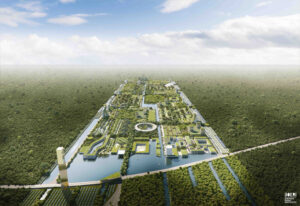 The Smart City Infrastructure Plans revealed today are complex blueprints for urban survival and prosperity in the digital age. They are characterized by massive, integrated investments in 5G connectivity, IoT sensor networks, and advanced data centers. These investments are justified by quantifiable returns in operational efficiency, primarily through reduced utility costs and optimized municipal labor.
Success hinges on a collaborative approach between government, technology investors, and private construction partners. The cities that execute these plans effectively, prioritizing strong data governance, robust cybersecurity, and digital equity, will be the global hubs of innovation and quality of life in the decades to come. This is the new era of public works, where the greatest value is found not in concrete and steel alone, but in the intelligent data flowing through them.